About Spent Refractory Bricks
At Gremlog Trading DMCC, we're proud to offer a sustainable alternative for spent refractory bricks. Instead of discarding them, we recycle these bricks into valuable raw materials with various applications.Our recycled refractory bricks can be used in powder coating, road-base aggregate, metallurgical processes, as slag conditioners, and even as feedstock for cement production. This not only reduces waste but also provides cost-effective options for industries.Moreover, these recycled materials can be directly reused in the manufacturing of new refractory bricks, closing the loop on sustainability.Join us in our mission to promote environmental responsibility while meeting your industrial needs. Contact Gremlog Trading DMCC today to learn more about our Recycled Spent Refractory Bricks.
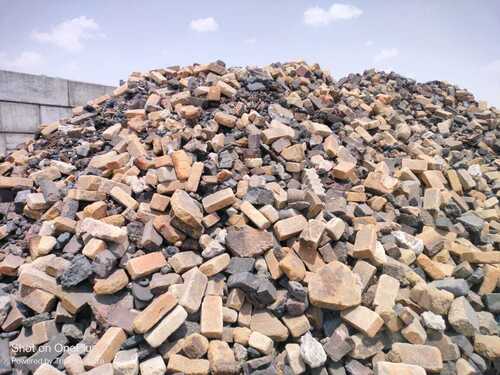
Key Features of Spent Refractory BricksThese reclaimed bricks are marked by their irregular shape, moderate to high porosity, and mixed crystalline composition with potential glassy phases. They display a reduced bulk density of 1.8 to 2.4 g/cm3 and typically contain traces of slag, ash, or metal inclusions. Their color ranges from light brown to dark grey, reflecting prior exposure. Easy packaging options include loose, jumbo bags, or pallets, with handling care advised due to dust and sharp edges.
Responsible Reuse and ApplicationsSpent refractory bricks are not suitable for reuse as lining in high-temperature furnaces; instead, they are valuable as secondary materials in construction, road base, or filler applications. Their varied dimensions and increased porosity make them ideal for recycling rather than disposal, supporting waste minimization in industries like cement, steel, and glass manufacturing.
FAQ's of Spent Refractory Bricks:
Q: How should spent refractory bricks be handled for safety?
A: Spent refractory bricks should be handled with caution due to potential dust generation and sharp edges. Manual or mechanical handling is possible, but it is advised to use appropriate protective equipment such as gloves and dust masks to minimize risks during movement and loading.
Q: What are the main uses of spent refractory bricks after their service life?
A: After retirement from high-temperature furnaces, these bricks are primarily recycled for alternative uses such as road base material, landfill cover, or construction fillers. They are unsuitable for direct reuse as refractory linings due to their reduced strength and increased porosity.
Q: When should spent refractory bricks be replaced or recycled?
A: Bricks should be removed and replaced once they reach the end of their working life, marked by significant wear, loss of strength (compressive strength below 15 MPa), or when their refractory properties are no longer adequate for safe furnace operation.
Q: Where can spent refractory bricks be utilized after removal?
A: In the United Arab Emirates and globally, spent refractory bricks are supplied to industries that recycle them for applications in construction projects, roadworks, landfills, or as aggregate for secondary product manufacturing.
Q: What is the benefit of recycling spent refractory bricks instead of landfill disposal?
A: Recycling spent bricks reduces landfill waste, promotes circular economy practices, and provides cost-effective alternatives for bulk fill and construction materials. Their stable, non-toxic composition also makes them safe for use in such secondary applications.
Q: How does the porosity of spent refractory bricks affect their properties?
A: Increased porosity (20-35%) leads to lower thermal conductivity and compressive strength compared to new bricks. While this makes them unsuitable for new lining applications, it enhances their suitability for use as lightweight construction fill or aggregate.




 Send Inquiry


 Send Inquiry
 English
 Spanish
 French
 German
 Italian
 Chinese (Simplified)
 Japanese
 Korean
 Arabic
 Portuguese