

Call us now
+971508374707
Call us now
+971508374707
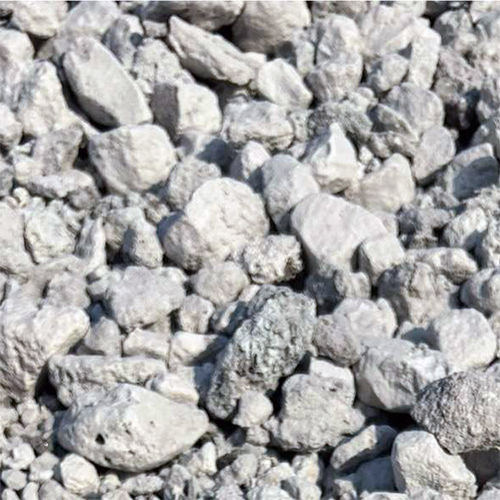
At Gremlog we offer highquality Bath Materialallowing for efficient aluminum smelting operations In the aluminum smeltingprocess any surplus Bath Material generated due to the high sodium Nacontent in alumina is expertly tapped in liquid form Subsequently we crushand recycle this surplus to kickstart new pots and compensate for electrolytelosses
Our Bath Material goes beyond primary aluminumproduction finding applications in aluminum scrap recycling and variousindustrial processes Whether youre involved in glass enamel ceramicsmanufacturing or other industries our Bath Material proves to be a versatileand valuable resource
Explore the highquality Bath Material solutionsoffered by Gremlog providing excellence in electrolyte materials for diverseindustrial application
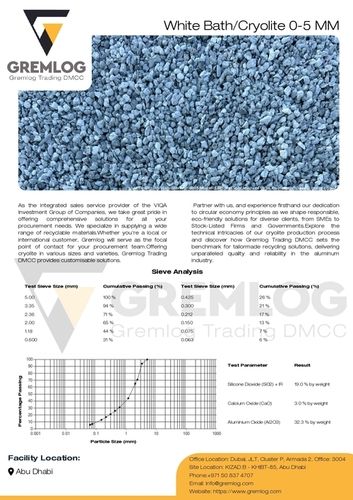
Discover the versatility of our cryolite offeringsavailable in a range of sizes tailored to meet diverse industry requirementsOur commitment to precision and customization ensures that our highqualitycryolite aligns seamlessly with the specific needs of your aluminum smeltingprocesses providing optimal performance and efficiencyChoose from ourmeticulously graded sizes including
05 mm
520 mm
2040 mm
040 mm
540 mm
Size Customized
Form Solid Pieces
Standard First Class
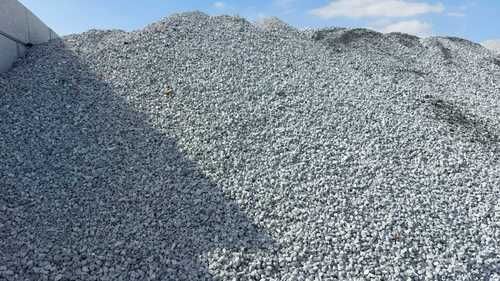
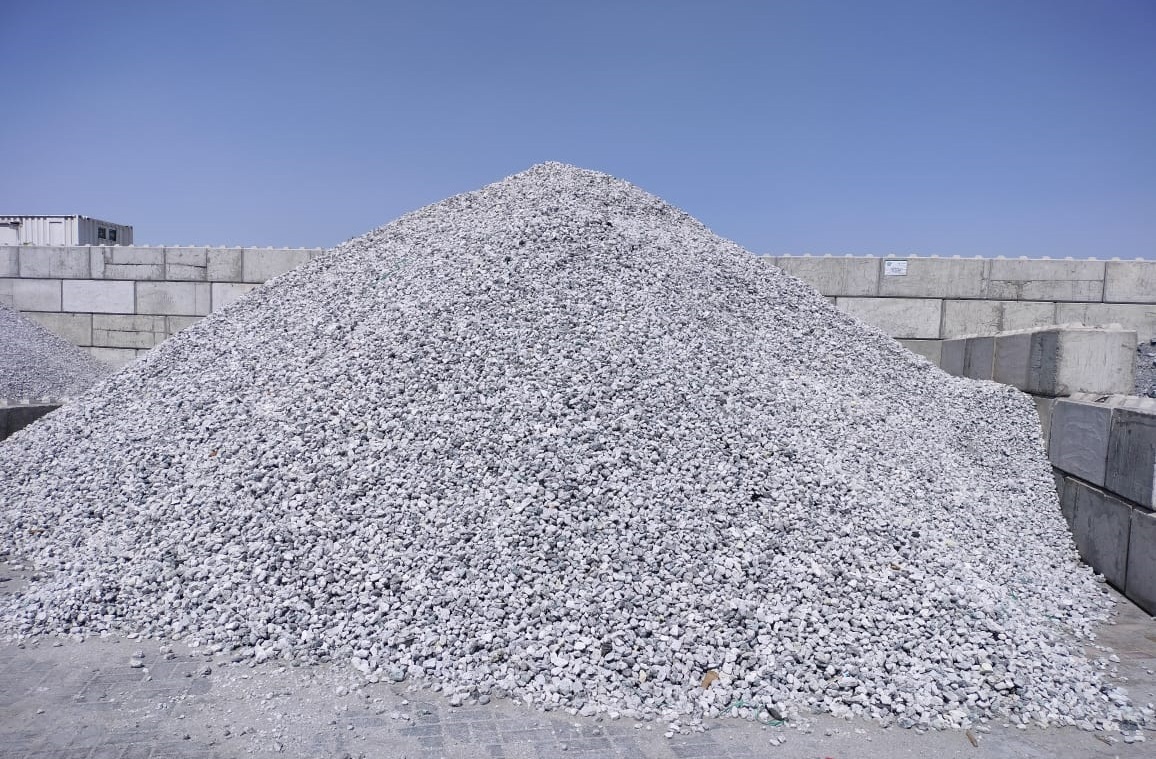

Price:
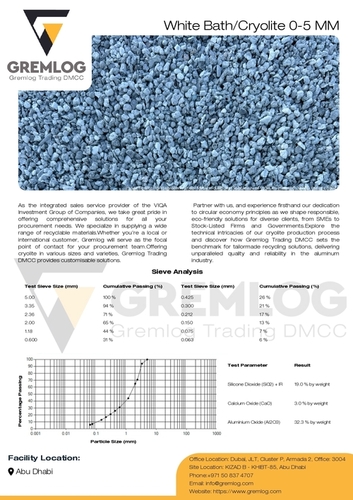
Price 225 USD ($) / Ton
Minimum Order Quantity : 50 Tons
CAS No : 13775536
Other Names : Recycled Cryolite, White Bath, Synthetic Cryolite, Bath Material
Chemical Name : sodium fluoride
Classification : Other
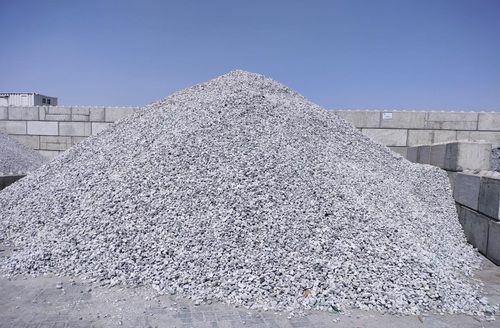
Price 210 USD ($) / Ton
Minimum Order Quantity : 50 Tons
CAS No : 13775536
Other Names : Recycled Cryolite, White Bath, Synthetic Cryolite, Bath Material
Chemical Name : sodium fluoride
Classification : Other
Minimum Order Quantity : 100 Tons
CAS No : 13755536
Other Names : Recycled Cryolite, White Bath, Synthetic Cryolite, Bath Material
Chemical Name : sodium fluoride
Classification : Other
Price 225 USD ($) / Ton
Minimum Order Quantity : 50 Tons
CAS No : 13775536
Other Names : Recycled Cryolite, White Bath, Synthetic Cryolite, Bath Material
Chemical Name : sodium fluoride


 Send Inquiry


 Send Inquiry
 English
 Spanish
 French
 German
 Italian
 Chinese (Simplified)
 Japanese
 Korean
 Arabic
 Portuguese